


-

Kyle Bonagura
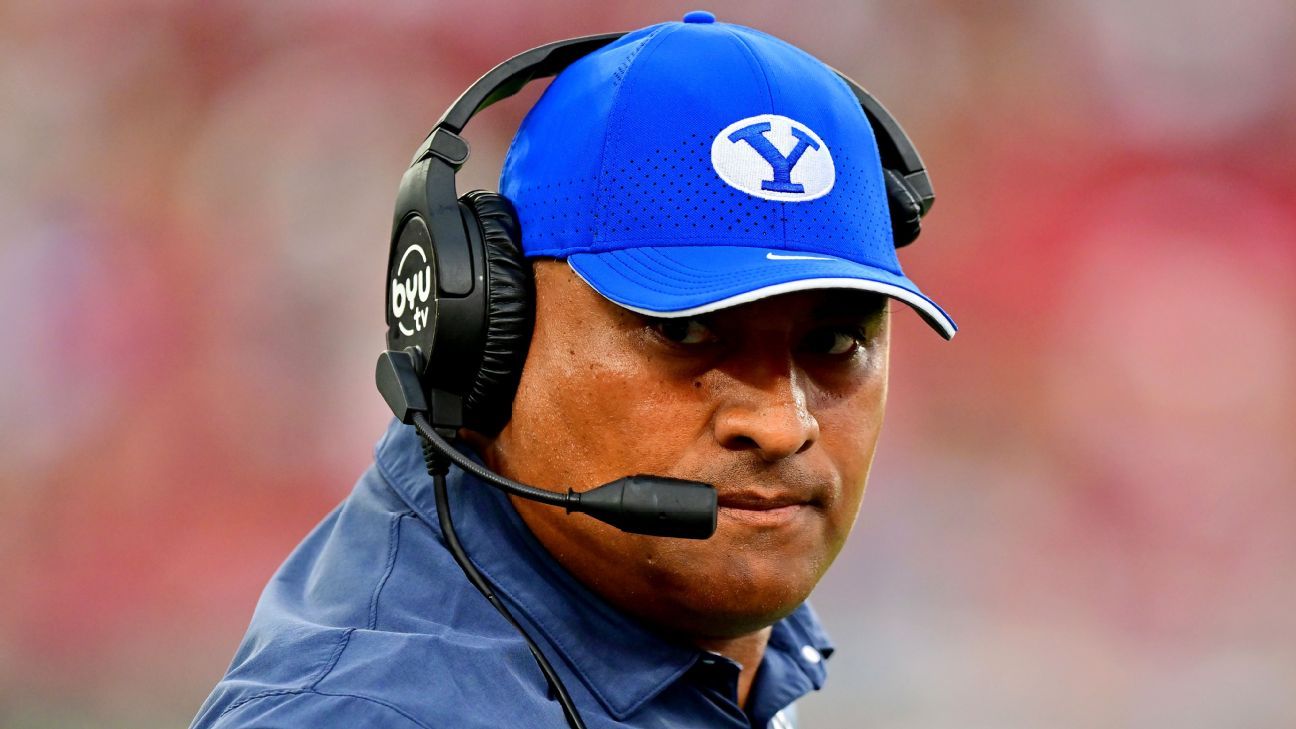
BYU coach Kalani Sitake has begun to inform people that he intends to stay at the school, rebuffing overtures from Penn State, sources told ESPN’s Pete Thamel.
BYU is in the process of putting together a lucrative contract to keep him and Sitake informed Penn State of his intention to remain in Provo, sources said.
The development comes as No. 11 BYU prepares for Saturday’s Big 12 title game against No. 5 Texas Tech, with the winner securing an automatic bid to the College Football Playoff.
Sitake has been BYU’s head coach since 2016 and has won more than 65% of his games. He led BYU to an 11-2 record in 2024, and the Cougars are 11-1 this season as they continue a rapid ascent in their third year in the Big 12. BYU officials had been aggressive in trying to retain Sitake, sources said, and considered keeping him the athletic department’s top priority.
Sitake has won at least 10 games in four of the past six seasons at BYU. After a 2-7 mark in Big 12 play during the program’s transition year in 2023, the Cougars have gone 15-3 since and identified a long-term answer at quarterback in freshman Bear Bachmeier.
The Penn State coaching search had focused on Sitake in recent weeks, with the sides engaging in discussions about the job. While there had been mutual interest – including conversations about staffing and other details of a potential tenure in State College – no agreement was ever reached, and Sitake ultimately elected to stay in Provo.
Penn State officials were active early in their coaching search, which included numerous in-person meetings around the country. That activity has quieted in recent weeks, sources told Thamel, even as candidates got new jobs and others received new contracts
Sitake, who played high school football in Missouri and starred at BYU before signing with the Cincinnati Bengals in 2001, has spent his entire coaching career west of the Mountain Time Zone, with stops at BYU, Oregon State, Utah, Southern Utah and Eastern Arizona. He is BYU’s fourth head coach since LaVell Edwards took over the program in 1972.