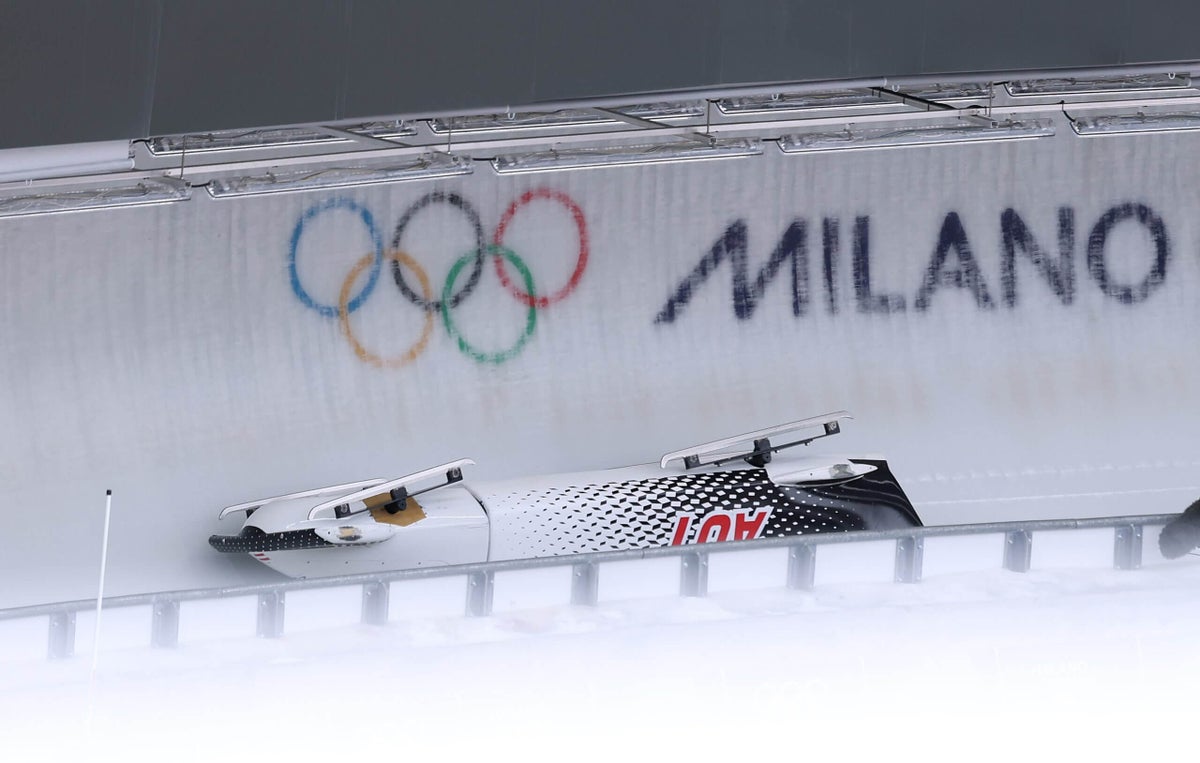
CORTINA D’AMPEZZO, Italy — Three different bobsleds tipped over around the same curve Saturday during the second heats of the 4-man competition at the Cortina Sliding Centre.
Teams from Austria, France and Trinidad & Tobago all saw their sleds tip onto their slide around the large, U-shaped Curve 7, about halfway down the course.
In each case, the sled slid for a long stretch — almost to the finish line — before coming to a stop. One of the Austrian team members, pilot Jakob Mandlbauer, was down on the track for a prolonged period of time but was “fine,” according to a team official.
A stretcher was brought to the scene, and the competition was delayed for approximately 20 minutes.
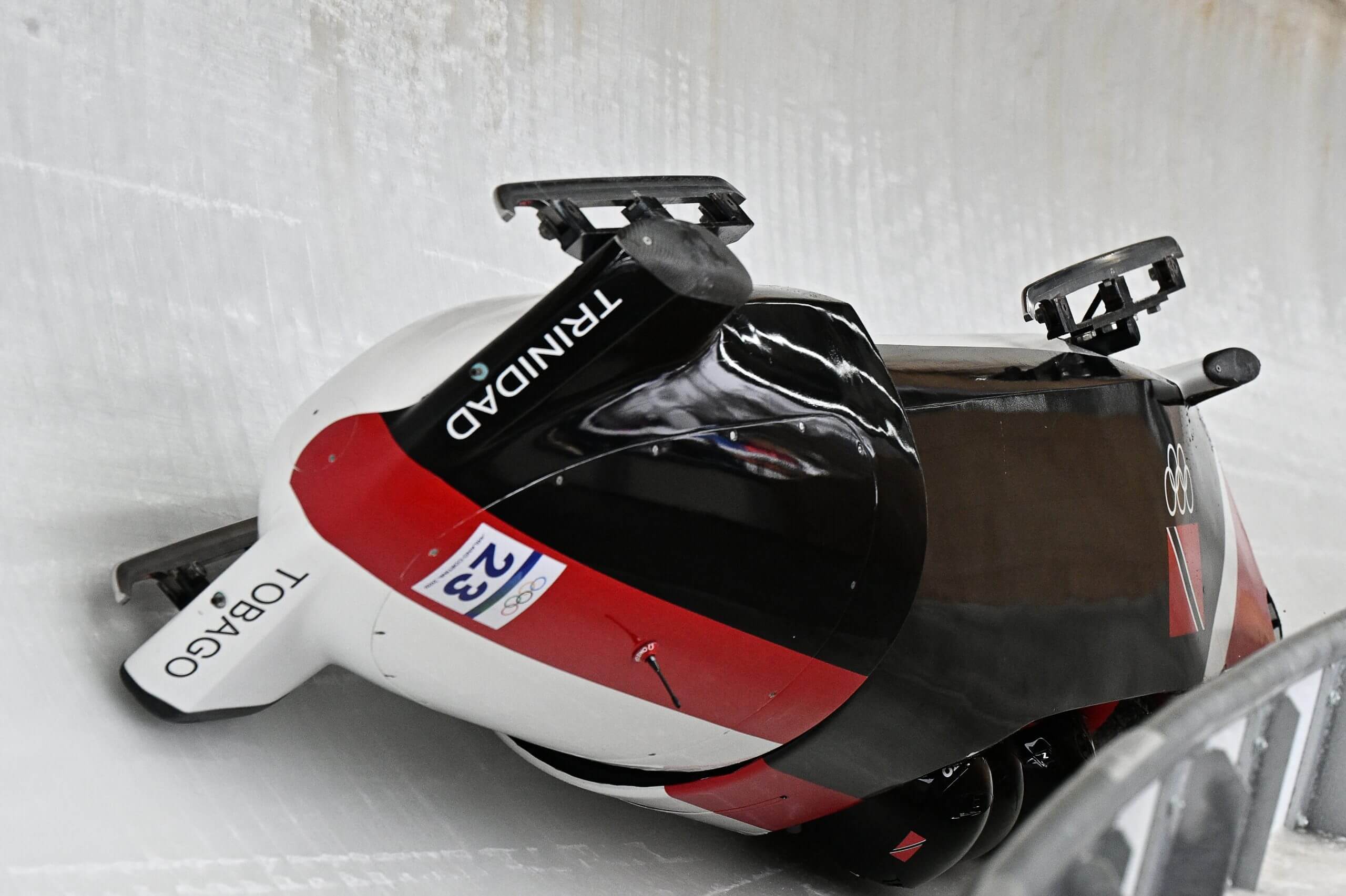
Trinidad & Tobago’s sled, tipped on the track. (Tiziana FABI / AFP via Getty Images)
In the sled, one of two belonging to Team Austria, were Mandlbauer, Daniel Bertschler, Sebastian Mitterer and Daiyehan Nichols-Bardi. Bertschler, Mitterer and Nichols-Bardi were all seen standing and leaving the scene on their own power.
“Jakob is on his way to hospital,” Christoph Iglhauser, Austrian team press attaché, told The Athletic. “He’s not so bad. It’s just a check. Everyone else is fine.
“No injury, only a check. He’ll be fine.”
The French sled consisted of pilot Romain Heinrich, Nils Blairon, Dorian Hauterville and Antoine Riou. Trinidad & Tobago’s had pilot Axel Brown, Shakeel John, Aundre de John and Xaverri Williams.
There was no immediate word on the French and Trinidad & Tobago athletes, but all were seen walking away from the scene.
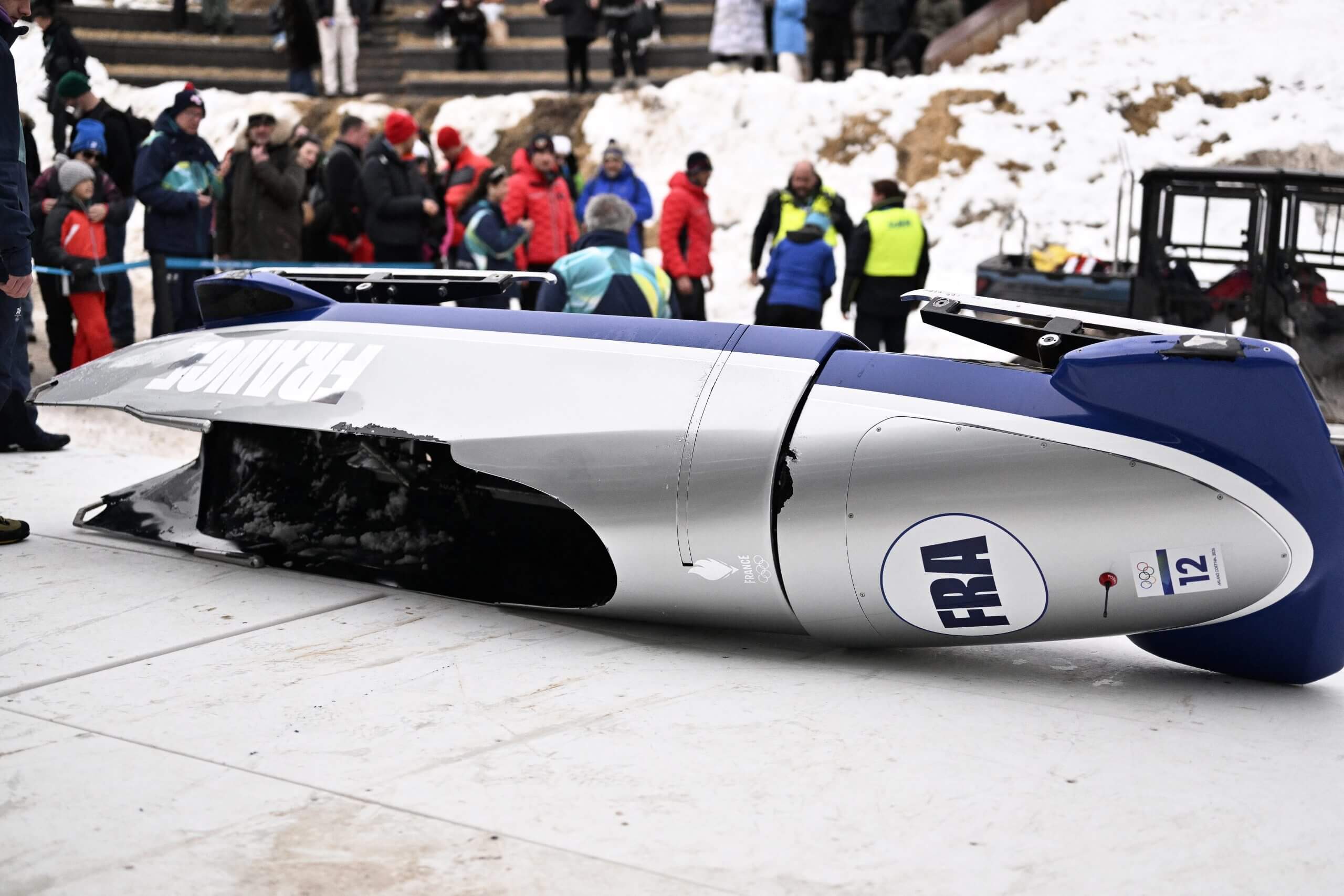
The French sled after the crash. (Tiziana Fabi / AFP via Getty Images)
There are 16 curves on the roughly 1,750-meter track. The track goes to a low point at the bottom, then rises again a bit to help the sleds slow down as athletes pull the brakes.
Back in November, Team USA pilot Frank Del Duca crashed during a training run on this same track, though his crash happened at Curve 4, which multiple sliding athletes at the Olympics have said is the trickiest curve here. One of Del Duca’s push athletes, Charlie Volker, sustained a concussion during that crash that eventually led to him retiring from bobsled in January, just weeks before USA Bobsled & Skeleton announced the national team.
Canada was in first place when Austria’s sled crashed.
“Sitting in the leader box, it’s tough to see,” said Canadian pilot Jay Dearborn. “Sleds going over in the Olympics, you don’t really want to see that. You don’t want to climb positions that way. You want to beat teams at their best.”
According to bobsled rules, all four athletes must cross the finish line with their sled, even if it tips or crashes, for a run to count. Because that didn’t happen, all three teams registered a “Did Not Finish” and were disqualified from the competition. None was in medal contention going into the second run. Austria’s other sled, piloted by Markus Treichl, sits in 10th place heading into the third run, which will take place Sunday morning. France and Trindad & Tobago each had only one sled competing.
“Any sport has risks,” said Dearborn, whose sled sits in 19th place heading into Sunday. “You know about them, and you try not to think about them for too long, and try to perform on race day, on training days to keep yourself safe.”
Both American sleds are likely off the podium, though as Saturday proved, anything can happen in this sport. Del Duca, the top Team USA pilot, is in 12th place after his sled’s best single run of the season, while the sled piloted by Kris Horn sits in ninth.
Three German sleds lead the competition, with pilot Johannes Lochner in first place. Germany, a bobsled powerhouse, swept the 2-man event Tuesday, while Del Duca’s sled finished fourth.
The Athletic’s Matt Slater and Zack Pierce contributed to this report.